Ever wondered how your brain sorts through the cacophony of everyday life, distinguishing a whispered secret from a blaring siren, or the intricate layers of a symphony? It all starts with a tiny, often overlooked structure deep within your inner ear: the basilar membrane. Understanding the Basilar Membrane Function in Hearing is like unlocking the secret code to how we perceive pitch, interpret complex sounds, and ultimately, make sense of our auditory world.
This isn't just about anatomy; it's about a marvel of biological engineering that transforms raw vibrations into meaningful information, allowing you to enjoy music, follow conversations, and navigate your surroundings safely.
At a Glance: How the Basilar Membrane Works
- Location: Tucked inside the snail-shaped cochlea in your inner ear.
- Structure: A thin, delicate ribbon of collagen fibers, varying in stiffness and width from base to apex.
- Key Players: Supports sensory hair cells, which are the true translators of sound.
- Primary Role: Acts as a mechanical frequency analyzer, vibrating in specific regions depending on the pitch of the sound.
- Mechanism: Converts fluid vibrations (from sound waves) into electrical signals.
- Pitch Perception: High pitches vibrate the stiff, narrow base; low pitches vibrate the flexible, wide apex.
- Vulnerability: Easily damaged by loud noise, aging, or certain medications, leading to permanent hearing loss.
The Unsung Hero: What is the Basilar Membrane?
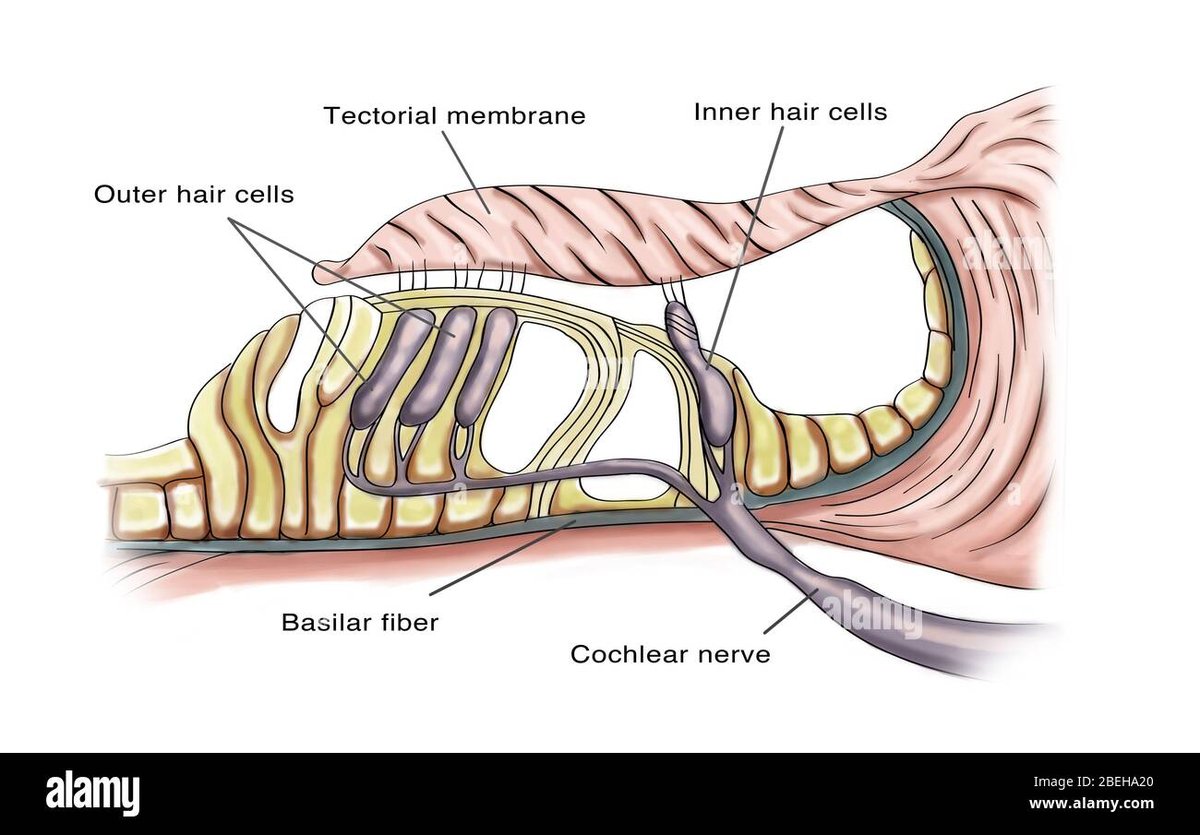
Imagine a delicate, vibrating ribbon, no wider than a few strands of hair, unspooling along the length of a tiny, fluid-filled spiral chamber. This is the basilar membrane, a crucial component nestled deep within your cochlea, the snail-shaped organ of your inner ear. It’s a foundational structure, separating two fluid-filled compartments—the scala media and the scala tympani—and serving as the platform for the Organ of Corti, which houses our vital sensory hair cells. If you want to dive deeper into the intricate anatomy of the inner ear, you'll find the basilar membrane is truly at the heart of it.
Physically, this membrane is a marvel of graduated design. Think of it like a finely tuned instrument string. At its very beginning, near the oval window (the "base" of the cochlea), it's relatively narrow and remarkably stiff. As it winds its way toward the center of the spiral (the "apex"), it gradually broadens and becomes significantly more flexible. This gradient in stiffness and width—from tight and taut to loose and yielding—is absolutely critical to its function, allowing it to respond differently to varying sound frequencies.
How Sound Becomes Signal: The Vibrational Journey
To truly appreciate the basilar membrane's genius, let's trace the journey of a sound wave. When sound hits your eardrum, it causes tiny bones in your middle ear (ossicles) to vibrate. These vibrations are then amplified and transferred to the fluid within your cochlea. As this fluid sloshes and moves, it creates waves that travel along the basilar membrane.
It's here, in this fluid dance, that the basilar membrane earns its keep. The incoming pressure waves cause different parts of the membrane to vibrate. Think of it like a ripple effect on a pond, but one where the "pond" itself changes properties along its length, allowing ripples of different speeds and sizes to crest at specific points. This mechanical vibration is the first critical step in translating the invisible energy of sound into something your brain can understand. This fascinating process is part of how sound travels through the ear from the outer world to your auditory cortex.
Pitch Perfect: The Basilar Membrane as a Frequency Analyzer
The basilar membrane isn't just a simple vibrator; it's a sophisticated frequency analyzer, a living spectrum interpreter. This remarkable ability is known as tonotopic organization, meaning that different frequencies (pitches) of sound stimulate different, specific regions along its length.
Here's the breakdown:
- High-Frequency Sounds: Imagine a sharp, high-pitched whistle or the shimmer of cymbals. These sounds create rapid, high-energy pressure waves in the cochlear fluid. Because the basilar membrane is narrower and stiffer at its base (the end closest to the middle ear), it’s precisely this region that resonates most effectively with these high-frequency vibrations. It's like plucking a short, tight guitar string—it produces a high note.
- Low-Frequency Sounds: Now picture the deep thrum of a bass guitar or the rumble of distant thunder. These lower-pitched sounds generate slower, broader pressure waves. These waves travel further along the basilar membrane, reaching its wider, more flexible apical end. This section of the membrane is better suited to vibrate in response to slower, low-frequency oscillations. Here, it’s akin to plucking a long, loose string, yielding a low note.
This spatial mapping of frequencies along the basilar membrane is what allows us to perceive pitch. When your brain receives signals primarily from the basal region, it interprets a high-pitched sound. When signals come predominantly from the apical region, it "hears" a low pitch. This intricate system enables us to differentiate between countless musical notes, recognize voices, and navigate the subtle nuances of speech. To visualize this incredible setup, explore the basilar membrane schematic. It’s a stunning example of form perfectly matched to function.
A Musical Analogy
Think of the basilar membrane as a grand piano keyboard. The "keys" at the right end (high notes) are short and tight, resonating with high frequencies. The "keys" at the left end (low notes) are long and loose, resonating with low frequencies. When a sound wave enters your ear, it "plays" a specific part of this membrane "keyboard," sending a distinct signal to your brain about the pitch you're hearing. This isn't just for single notes; complex sounds, like a spoken word or a chord, activate multiple regions simultaneously, allowing your brain to reconstruct the rich tapestry of sound.
Boosting the Signal: Cochlear Amplification
The basilar membrane isn't just a passive receiver; it's an active participant in enhancing our hearing. It plays a crucial role in cochlear amplification, a remarkable process that significantly boosts weak sound signals. How does it do this? Through a feedback loop involving the outer hair cells.
These specialized cells, sitting on the basilar membrane, don't directly send sound information to the brain. Instead, they actively contract and expand in response to sound vibrations. This movement literally "pushes" and "pulls" on the basilar membrane, amplifying its vibration for soft sounds. This active amplification means we can hear an incredibly wide range of sound intensities, from the rustle of leaves to a roaring jet engine. Without this cochlear amplifier, our hearing sensitivity would be severely limited, making it much harder to pick up quiet sounds or differentiate subtle auditory cues.
The Delicate Dance: Hair Cells and Signal Transmission
Atop the basilar membrane sits the Organ of Corti, a true marvel of sensory biology. Within this organ are thousands of tiny, highly specialized cells: the hair cells. These aren't just any cells; they are the true transducers of sound, converting mechanical vibrations into electrical signals that your brain can understand.
Here’s the elegant sequence:
- Vibration Meets Hair Cells: As the basilar membrane vibrates in response to sound, it causes the hair cells (specifically their delicate, hair-like projections called cilia) to move.
- Cilia Bend: These cilia are incredibly sensitive. As they brush and bend against another membrane, the tectorial membrane, this mechanical bending acts like a switch.
- Ion Channels Open: The bending literally pulls open tiny ion channels at the tips of the cilia.
- Electrical Signal Generated: When these channels open, electrically charged ions (like potassium and calcium) rush into the hair cell, changing its electrical potential. This creates an electrical signal, known as a receptor potential.
- Neurotransmitter Release: This electrical signal triggers the release of neurotransmitters at the base of the hair cell.
- Auditory Nerve Activation: These neurotransmitters then excite the dendrites of the auditory nerve fibers, generating action potentials that travel directly to the brain.
It’s this intricate chain of events, initiated by the basilar membrane's precise vibrations, that allows your brain to receive a neural "message" describing the pitch, loudness, and timbre of a sound. Without the basilar membrane's mechanical genius, the hair cells would have nothing to react to, and the world would fall silent. Discover the incredible mechanics of hair cells to truly appreciate this biological wonder.
When the Music Stops: Understanding Basilar Membrane Damage and Hearing Loss
The basilar membrane and its precious cargo of hair cells are remarkably efficient, but also incredibly vulnerable. Unlike many other cells in the body, the hair cells on the basilar membrane are non-regenerating. Once damaged, they're gone forever, leading to permanent hearing impairment. This type of irreversible hearing loss is known as sensorineural hearing loss.
Several factors can lead to this debilitating damage:
- Prolonged Exposure to Loud Noise (Acoustic Trauma): This is perhaps the most common preventable cause. Sounds exceeding 85 decibels (dB)—roughly the volume of heavy city traffic—can physically damage the delicate hair cells and even the basilar membrane itself. Think concerts, construction sites, loud headphones, or industrial machinery. The intensity of the sound literally overstresses and destroys these fragile structures.
- Aging (Presbycusis): As we age, our hearing naturally deteriorates. This age-related hearing loss, known as presbycusis, often manifests as a gradual loss of high-frequency hearing first. This is because the hair cells at the basal (high-frequency) end of the basilar membrane are often the first to wear out from a lifetime of auditory exposure.
- Ototoxic Drugs: Certain medications are known to be "ototoxic," meaning they can be toxic to the ear. Aminoglycoside antibiotics (e.g., gentamicin) and certain chemotherapy drugs (e.g., cisplatin) are well-known culprits. These drugs can directly damage hair cells, leading to hearing loss or balance issues.
- Genetics and Disease: In some cases, genetic predispositions or certain diseases (like Meniere's disease or autoimmune inner ear disease) can also affect the health and function of the basilar membrane and hair cells.
The consequences of basilar membrane or hair cell damage are profound. Beyond just a reduction in hearing sensitivity, individuals often struggle with: - Difficulty Distinguishing Sounds: Complex sounds become muddled, making it hard to differentiate between similar-sounding words.
- Impaired Speech Understanding: Especially challenging in noisy environments, where the brain struggles to filter out background noise and focus on speech.
- Tinnitus: A persistent ringing, buzzing, or hissing sound in the ears, which can be a side effect of hair cell damage.
Understanding understanding different types of hearing loss highlights how crucial the basilar membrane's integrity is for healthy hearing.
Protecting Your Perception: Practical Steps for Ear Health
Given the irreplaceable nature of hair cells and the basilar membrane's critical role, prevention is paramount. Here's how you can protect your auditory health:
- Mind the Volume: Use hearing protection (earplugs, earmuffs) in noisy environments, whether it's a concert, a construction site, or even when mowing the lawn.
- "60/60 Rule" for Headphones: When listening with headphones, keep the volume at 60% of maximum and take breaks every 60 minutes.
- Regular Hearing Checks: Especially as you age, regular audiologist visits can detect early signs of hearing loss, allowing for intervention and management.
- Be Aware of Ototoxic Meds: If you're prescribed medications known to be ototoxic, discuss the risks and benefits with your doctor and monitor your hearing closely.
- Healthy Lifestyle: General health practices, like managing blood pressure and diabetes, can also support overall ear health, as the inner ear relies on a robust blood supply.
FAQs: Your Basilar Membrane Questions Answered
What happens if the basilar membrane is damaged?
Damage to the basilar membrane, or more commonly to the hair cells it supports, results in sensorineural hearing loss. This loss is typically permanent because the hair cells do not regenerate. It can lead to reduced hearing sensitivity, difficulty understanding speech, especially in noise, and sometimes tinnitus.
Is the basilar membrane responsible for loudness perception?
While the basilar membrane's vibration initiates the process, loudness perception is primarily determined by the amplitude (intensity) of its vibration and the number of hair cells activated. Louder sounds cause stronger vibrations and activate more hair cells, sending a more frequent barrage of electrical signals to the brain, which it interprets as increased loudness.
Can the basilar membrane be repaired?
The basilar membrane itself is quite resilient. However, the delicate hair cells sitting on it, which are critical for converting vibrations into neural signals, do not regenerate in humans. Research into stem cell therapies and gene editing holds promise for future repair, but currently, damage to these cells is permanent.
How does the basilar membrane differentiate between two similar sounds?
The basilar membrane's tonotopic organization allows it to separate complex sounds into their individual frequency components, much like a prism separates white light into a rainbow. Each frequency component causes a specific region of the membrane to vibrate maximally. The brain then integrates these distinct spatial and temporal patterns of vibration to identify and differentiate even very similar sounds.
Beyond the Basics: Emerging Research and Future Prospects
The basilar membrane and its associated structures remain a vibrant area of scientific inquiry. Researchers are continuously exploring new ways to understand its mechanics, the intricate genetics that govern its development, and crucially, strategies for repairing or replacing damaged hair cells.
Advances in areas like gene therapy and stem cell research offer glimmering hope for restoring hearing in the future. Scientists are investigating whether it's possible to coax remaining cells in the cochlea to differentiate into new hair cells or to protect existing ones from damage. For those with severe damage, technologies like cochlear implants bypass the damaged basilar membrane and hair cells entirely, directly stimulating the auditory nerve, allowing for a remarkable restoration of sound perception. You can explore solutions like cochlear implants to see how technology bridges the gap.
The Symphony Within: A Final Note on Auditory Wonders
The basilar membrane, this humble ribbon of tissue, is far more than just a passive receptor. It's an active, dynamic, and elegantly designed component of your auditory system, acting as a sophisticated frequency analyzer, a signal amplifier, and the very foundation upon which your perception of pitch is built. Its intricate structure and specialized function are what allow you to appreciate the richness of music, understand the nuances of speech, and connect with the world through sound.
Protecting this delicate wonder is key to a lifetime of vibrant auditory experiences. So, the next time you marvel at a melody or follow a compelling conversation, take a moment to appreciate the silent, tireless work of your basilar membrane—the unsung hero that orchestrates the symphony within your head.