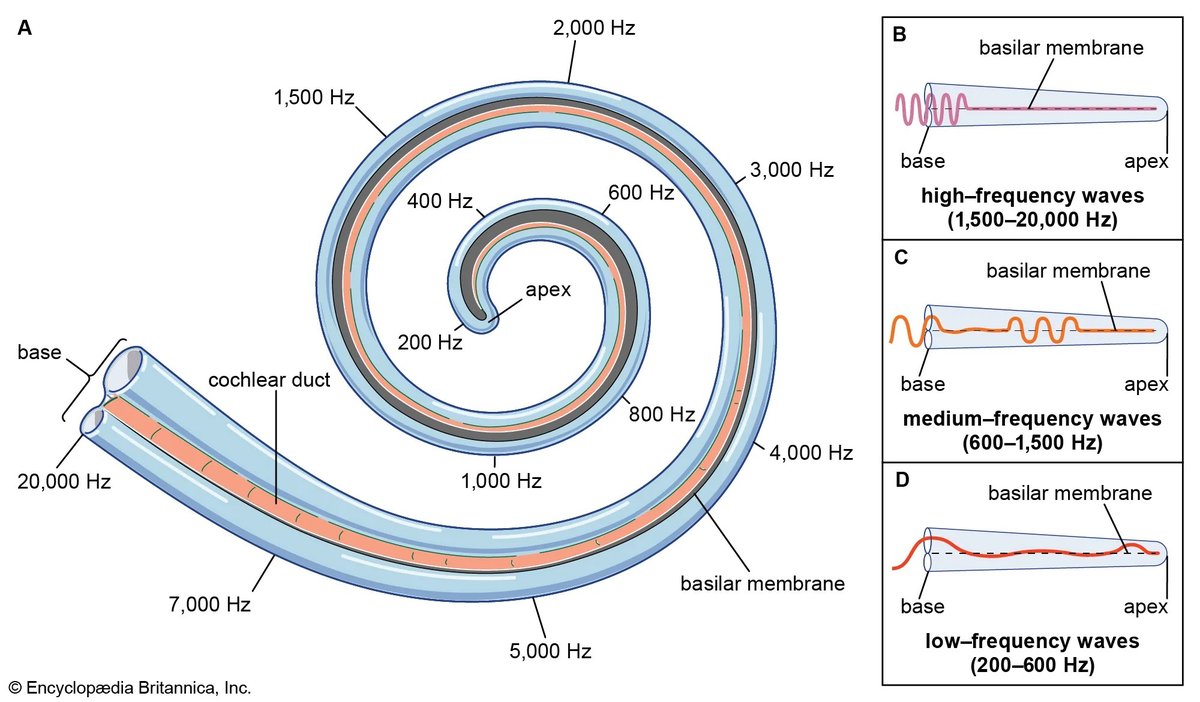
For decades, our understanding of fundamental biological structures has been evolving, revealing layers of complexity we once only dimly perceived. Advanced models and research on membrane mechanics are at the forefront of this journey, continuously redefining what we know about how these vital components function. While the term "Basilar Membrane Mechanics" might initially evoke images of the inner ear's intricate sound processing, our exploration today will delve into a different, yet equally vital, biological structure: the Basement Membrane (BM).
This comprehensive guide is built upon the latest scientific understanding of the Basement Membrane, a critical, thin, and dynamically organized extracellular matrix that underpins epithelia and envelops most organs throughout metazoan life. It's a key player in development, tissue stabilization, cell signaling, and much more. Think of it not just as a static boundary, but as a dynamic, intelligent scaffold that actively participates in shaping life itself.
At a Glance: Key Insights into Basement Membrane Mechanics
- Beyond a Simple Barrier: The Basement Membrane (BM) is far more than a passive support structure; it's a dynamic, actively remodeling extracellular matrix (ECM) essential for tissue development and function.
- Core Components: Primarily composed of Laminin, Collagen IV, Nidogen, and Perlecan, the BM's specific molecular makeup varies across tissues and organisms, dictating its unique physical properties.
- Genetic Models Lead the Way: Organisms like Drosophila melanogaster (fruit flies) and Caenorhabditis elegans (roundworms) are indispensable for dissecting BM functions due to their genetic tractability and similarity to human biology.
- Dynamic Turnover is Key: The BM is constantly synthesized and degraded, a process known as turnover, which is crucial for its maturation and remodeling. This rapid turnover (often within hours for some components) allows for swift adaptation.
- Mechanical Intelligence: The BM possesses distinct material properties—stiffness, viscoelasticity, and strength—which are not uniform. Localized stiffness gradients and controlled remodeling actively sculpt tissues and influence cell behavior.
- Intertwined Functions: BM acts as both a mechanical cue and a reservoir for signaling molecules, with its biophysical and biochemical roles often inextricably linked in complex regulatory feedback loops.
Beyond a Simple Scaffold: The Dynamic World of the Basement Membrane
Imagine a foundational layer that doesn't just hold things together, but actively participates in shaping, growing, and guiding every cell it touches. That's the Basement Membrane (BM) – a sophisticated, planar-organized extracellular matrix (ECM) crucial for everything from stabilizing tissue structure to orchestrating cell behavior during development. It's not a uniform, inert sheet; rather, it’s a highly dynamic structure whose molecular composition, architecture, and assembly mechanisms vary significantly, leading to a diverse array of physical characteristics across different tissues and developmental stages. To grasp its intricate organization, you might think of it as a finely tuned biological fabric, intricately woven and constantly re-woven, with distinct properties in different areas. For a general understanding of membrane organization, you can view this schematic of a membrane’s structure.
This incredible adaptability allows the BM to exert precise control over tissue development. By carefully regulating its deposition or degradation, the body can create heterogeneous matrices—areas with differing protein densities, compositions, thicknesses, or polarization. This localized variation induces temporospatial force anisotropy, essentially directing mechanical forces in specific ways to enable the sculpting of complex organs and tissues.
The Building Blocks: What Makes Up the BM?
At its core, the Basement Membrane across most metazoan life relies on a consistent set of key proteins: Laminin, Collagen IV, Nidogen, and Perlecan. Each plays a distinct, yet interconnected, role in forming this intricate network.
- Laminin: Often considered the primary scaffolding protein, Laminin has a remarkable ability to self-assemble into a matrix, forming the initial structural backbone of the BM. Its specific expression can vary significantly across tissues, highlighting its tailored roles.
- Collagen IV: This protein provides tensile strength and structural integrity. It often works in concert with other components, sometimes with counteracting functions, to fine-tune tissue mechanics.
- Nidogen: Once thought essential for recruiting other core BM components like Collagen IV and Perlecan, more recent research has challenged this view. Studies in various model organisms have demonstrated that Nidogen is often dispensable for the assembly of these other key players, suggesting a more nuanced or context-dependent role.
- Perlecan: A large heparan sulfate proteoglycan, Perlecan contributes to the BM's biomechanical properties and acts as a reservoir for signaling molecules. Interestingly, it can have functions that counteract Collagen IV, as seen in tissue sculpting.
The precise mix and arrangement of these components, alongside other tissue-specific ECM proteins, dictate the BM's unique mechanical properties and signaling capabilities.
From Assembly Line to Active Players: BM Formation and Maturation
The functionality of the Basement Membrane isn't just about having the right ingredients; it's about their correct assembly and maturation. The origins of ECM protein synthesis can vary within a living organism, either through local tissue expression or secretion by migrating cells. For instance, Laminin exhibits tissue-specific expression patterns in organisms like Drosophila and mice, underscoring its tailored roles.
When the assembly process goes awry, the consequences can be profound. The loss of Laminin in Drosophila embryos, for example, doesn't just mean a missing scaffold; it leads to unspecific accumulations of other BM components and severe developmental defects across a range of vital tissues, including the nervous system, muscles, heart, gut, and trachea.
The interactions between BM components are complex and dynamic. While Nidogen was long considered a crucial linker protein, directly recruiting Collagen IV and Perlecan, more recent advanced research using Drosophila, C. elegans, and mouse models has refined this understanding. These studies consistently show that Nidogen is largely dispensable for the initial assembly of the other core BM components. This doesn't mean it's irrelevant, but rather that its role might be more about modulating stability or specific functions rather than being an absolute prerequisite for basic assembly.
Furthermore, some BM components can even have counteracting functions, highlighting a delicate balance in tissue sculpting. In the Drosophila wing disc, for example, Perlecan's assembly depends on Collagen IV, but once integrated, Perlecan then actively counters the constricting abilities of Collagen IV. This push-and-pull dynamic is critical for achieving precise tissue shapes. Similarly, in C. elegans, Perlecan promotes growth at the neuromuscular junction, and its absence leads to gonad compaction. In the Drosophila ventral nerve cord (VNC) and egg chamber, both Perlecan and Collagen IV are essential for structural integrity and elongation, with knockdown of either protein inhibiting elongation in similar ways.
Advanced Models Uncover BM's Dynamic Life Cycle
One of the most profound insights from advanced research is the recognition that the Basement Membrane is far from static. It's a constantly evolving entity, actively remodeled throughout development and adult life.
Genetic Model Organisms as Our Guides
Understanding the intricate functions of the BM in morphogenesis relies heavily on powerful genetic model organisms. Drosophila melanogaster (the fruit fly) and Caenorhabditis elegans (the roundworm) are particularly crucial. Why? Because they share significant genetic similarities with humans, yet offer unparalleled advantages for genetic manipulation and live imaging. Their relatively simple body plans and rapid life cycles allow researchers to meticulously study how individual BM components contribute to tissue formation, identify genetic pathways involved, and observe dynamic processes in real-time. These models provide a robust platform for unraveling the fundamental principles that often translate directly to more complex mammalian systems.
Turnover and Homeostasis: The BM's Constant Renewal
BM functionality is inextricably linked to the turnover—the continuous synthesis and degradation—of its individual ECM proteins. This dynamic process ensures the BM can adapt to changing mechanical demands and developmental cues.
Consider the role of matrix metalloproteases (MMPs), enzymes that break down ECM components. In Drosophila embryogenesis, for instance, Mmp1 mutants show approximately a 20% decrease in overall BM turnover. Conversely, Nidogen mutants exhibit a roughly 20% increase in turnover, suggesting that while Mmp1 is actively involved in the degradation of Collagen IV, Nidogen actually plays a role in stabilizing it. Disturbances in this delicate balance, such as impaired Collagen IV turnover, can significantly hinder tissue morphogenesis, manifesting as slowed ventral nerve cord condensation. In C. elegans, a specific AdamTS-like gene, Papilin, has been identified as a key regulator of Collagen IV turnover.
Advanced techniques like Fluorescence Recovery After Photobleaching (FRAP) have revolutionized our ability to quantify BM turnover in living tissues. FRAP studies reveal a surprisingly rapid turnover of the BM, often occurring within hours for some components. What's even more fascinating is the differential turnover rates: major scaffolding proteins like Laminin and Collagen IV tend to have slower turnover rates, remaining relatively stable, while linker proteins such as Nidogen or Fibulin exhibit much faster lateral movement and turnover. This suggests a highly dynamic scaffold structure, where the core framework is stable, but its connections and modulatory elements are in constant flux, allowing for swift adaptation and remodeling.
Sculpting Tissues: BM's Role in Morphogenesis and Mechanical Control
The BM is not merely a passive recipient of cellular forces; it actively participates in shaping tissues and organs by providing and responding to mechanical cues. This active role in morphogenesis is a cornerstone of advanced BM research.
Local Remodeling and Stiffness Gradients
Controlled outgrowth and precise tissue shaping depend critically on local BM remodeling. A prime example is the Drosophila egg chamber elongation (stages 5-8). This process requires a carefully orchestrated stiffness gradient within the BM—higher stiffness in the central region and lower stiffness at the terminals. This gradient guides the tissue's elongation. Enzymes like AdamTS-A, a matrix metalloprotease whose activity is influenced by JAK/Stat signaling, are essential for this elongation process.
BM dynamism is also vividly observed in mammalian development, such as during mouse salivary gland development, where the BM undergoes continuous reorganization to facilitate branching morphogenesis. Similarly, the precise shape and condensation of the Drosophila ventral nerve cord depend on proper BM assembly and the regulated activity of matrix-degrading proteases like Mmp2, Kuzbanian, and AdamTS-A. These examples collectively illustrate how the in vivo assembly of BM components and the resulting mechanical heterogeneity are fundamental drivers of organ sculpting.
Material Properties: Beyond Just Support
The physical attributes of the Basement Membrane—its material properties—are fundamental to its role in tissue formation and constriction, profoundly influencing cell behavior. These properties include:
- Stiffness: How resistant the BM is to deformation. Local variations in stiffness can guide cell migration, differentiation, and tissue patterning.
- Viscoelasticity: The ability of the BM to deform under stress and gradually return to its original shape. This property allows tissues to withstand repeated mechanical loads and facilitates dynamic remodeling.
- Poroelasticity: The interaction between the BM's solid matrix and the fluid within its pores, influencing fluid flow and nutrient transport.
- Maximum Strength: The limit of stress the BM can withstand before permanent deformation or failure.
These material properties are not fixed but are actively modulated by the BM's composition and organization. Techniques like FRAP (as mentioned for turnover) and optogenetics are increasingly used not just to quantify protein dynamics but also to directly measure and even manipulate the mechanical behavior of the BM in living systems, providing unprecedented insights into its mechanosensory functions.
Unraveling Complexity: Uncoupling Biochemical and Biophysical Functions
One of the significant challenges in matrix biology is understanding how the Basement Membrane's biochemical functions—its role as a reservoir for signaling molecules—are uncoupled from, yet deeply intertwined with, its biophysical functions, such as providing mechanical cues.
The BM is a complex signaling hub. It serves as a vital reservoir for growth factors and other signaling molecules, which are often bound to specific ECM components, regulating their bioavailability and presentation to cells. Concurrently, the BM provides direct mechanical cues to cells through integrin receptors, influencing cell shape, migration, proliferation, and differentiation.
Intriguingly, specific BM components themselves play a dual role in signaling. For instance, Collagen IV and Perlecan are known to directly regulate various signaling pathways, bridging the gap between mechanical force and biochemical response. Understanding how these roles are coordinated and how they impact tissue development and disease progression is a frontier of current research. The goal is to dissect how the inherent diversity of BMs across different tissues contributes to their unique active mechanical roles and how this interplay guides cellular destiny.
Looking Ahead: The Future of Basement Membrane Research
Our journey into the mechanics of the Basement Membrane reveals a structure of immense complexity and dynamic importance. Future research is poised to push the boundaries even further, aiming to unravel the high diversity of BMs across different tissues and to fully appreciate their active mechanical roles in health and disease.
This next phase of discovery will leverage increasingly sophisticated methodologies:
- Long-term Live-Imaging: High-resolution, multi-modal live imaging techniques will allow researchers to observe BM dynamics over extended periods in unprecedented detail, capturing subtle remodeling events and their consequences.
- Advanced Genetic Manipulation: Refined genetic tools will enable precise spatiotemporal control over BM component expression and function, allowing for targeted disruption or enhancement to study specific mechanical effects.
- Direct Biophysical Measurements: Integrating live imaging with cutting-edge biophysical tools for direct measurement of BM stiffness, viscoelasticity, and force transmission will provide quantitative insights into how mechanical properties drive biological processes.
- Computational Modeling: Advanced computational models will be crucial for integrating complex experimental data, simulating BM behavior under various conditions, and predicting how changes in composition or structure impact overall tissue mechanics.
By integrating these advanced methods, we stand on the cusp of a deeper understanding of the Basement Membrane's orchestrating role in tissue morphogenesis, homeostasis, and repair. These insights promise to open new avenues for understanding developmental disorders, cancer metastasis, fibrosis, and aging, ultimately paving the way for innovative therapeutic strategies and advancements in regenerative medicine. The BM, once seen as a mere support structure, is truly emerging as a dynamic maestro, conducting the symphony of life at the cellular and tissue levels.